
At RTC Lab, we always look for real insights that help our readers run better online events and lead stronger teams. Recently, we took part in two excellent webinars organized by LiveWebinar – one with Piotr Król and the other with Kosma Wilk. Both of them shared fantastic advice based on their own real-world experience. In tis post, we want to share those important lessons with you so you can start using them right away. We will talk about how to make your online events much more interesting and fun for your audience, instead of just showing them boring slides. We will also look at how to build real trust and keep communication easy and clear when you are managing a remote or hybrid team.
The first webinar featured Piotr Król, from VideoKings.pl who has hosted over 11,000 online events and written the “Webinar Scenario Bible.” His main message is clear: the success of a webinar does not come from luck or the host’s charisma alone. Every great webinar is built on a clear, well-thought-out script, or what Piotr calls a “framework.” This framework is a step-by-step plan that helps you lead your audience from start to finish, keep them interested, and guide them towards action, whether that’s buying a product or becoming regular followers.

During the webinar, Piotr explained that while there are many popular templates out there (like the “slide, question, three secrets” approach), you cannot rely on copying these blindly. Instead, you should adapt them to your own audience and message. Real success means being systematic, testing, adjusting, and finding what works best for your viewers. Most importantly, no script will help if you’re not authentic. Viewers can sense when someone is real and speaking with passion. So bring energy and honesty every time you’re live.
Common Mistakes and Practical Fixes
Piotr also pointed out many mistakes he sees among webinar hosts. Some people spend too little time on technical preparation, which can lead to problems during the event. Others don’t plan the time for their presentation and Q&A properly: sometimes the educational part drags on while the sales pitch is rushed, or the opposite happens. Some hosts skip over their offer in just a few seconds, worried about being too “salesy.” Still others try to run everything themselves and end up with a messy chat or technical issues that distract from the main message.
The best practice is to have a moderator who manages the chat and technical side, letting the presenter focus only on delivering content. Piotr recommends always leaving the Q&A session for the end, this keeps the main message clear and ensures that focused participants stay until the finish.
After the webinar, don’t just say goodbye and forget about your audience. The follow-up is key to building a strong relationship. Send the recording to everyone who signed up, whether they attended live or not. Ask for feedback through a quick survey. Offer something extra, a downloadable checklist, a discount, or an eBook. And reach out to potential leads personally if you can. According to Piotr, the days and weeks after your event are where real sales and relationships are built.
Piotr also shares that the most memorable webinars use storytelling, not just information. He encourages hosts to share true stories, both the successes and the mistakes. Showing your real self and discussing what went wrong builds trust. People remember funny or honest moments far longer than perfect but flat presentations.
Building Better Remote Teams
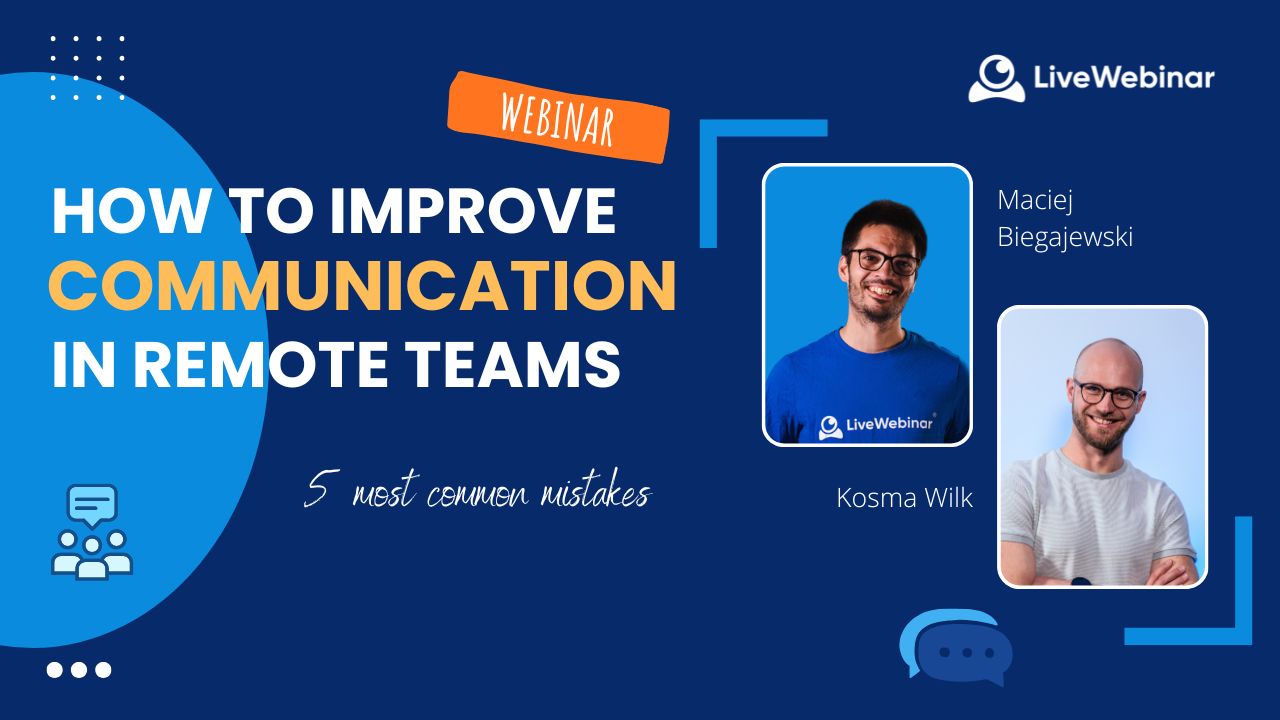
The second LiveWebinar event was all about remote team management, led by Kosma Wilk, an experienced manager and podcast creator. Today, many of us work from home or in a hybrid model, which brings new challenges. Kosma explained the five most common mistakes leaders make when managing teams online and gave tips to avoid them.
First, it is essential to set clear rules for how the team works together. The best approach is to create these rules with the team, not just hand them down from above. Involving people makes them more likely to follow the guidelines.
Second, managers should avoid micromanaging and constantly checking every small detail. Instead, leaders should focus on goals and teach responsibility. Let the team help define what good results look like and how to measure them.
Third, online teams often suffer from too many meetings, many of which lack a clear purpose. Kosma advises cutting down on useless meetings and making time for meaningful one-on-one conversations, which are crucial for feedback and trust.
Fourth, remote work often means noisy calendars, messy file folders, and tool overload. It pays off to choose a good task management system, keep calendars organized, and set up routines for sharing notes and tracking progress. Daily or weekly team check-ins with specific agendas can make a big difference.
Finally, Kosma reminds us not to forget about the “human” side of teams. Build personal relationships, show real interest in people’s lives, and organize occasional online or in-person team-building activities. People don’t usually leave a company: they leave a boss who doesn’t support them.
Key Takeaways for Your Work
Our main lessons from these LiveWebinar sessions:
- Use a solid script as your foundation, but always adapt and improve based on feedback and results.
- Focus on authentic communication and share your real stories—not just successes, but mistakes and lessons, too.
- Get help with moderation and technical details, so presenters can concentrate on the audience.
- Your job doesn’t end when the webinar stops—follow up, provide value, keep building relationships.
- For remote teams: set rules together, stop micromanaging, manage meetings wisely, keep systems simple, and never forget the people behind the screens.
If you want to learn more, check out LiveWebinar’s YouTube channel for recorded sessions with Piotr Król and Kosma Wilk. And for regular practical event reviews, team productivity advice, and more, keep following RTC Lab and LiveWebinar.
The road to great webinars and strong digital teams isn’t about luck, it’s about putting the basics into practice, step by step.
Recent Comments